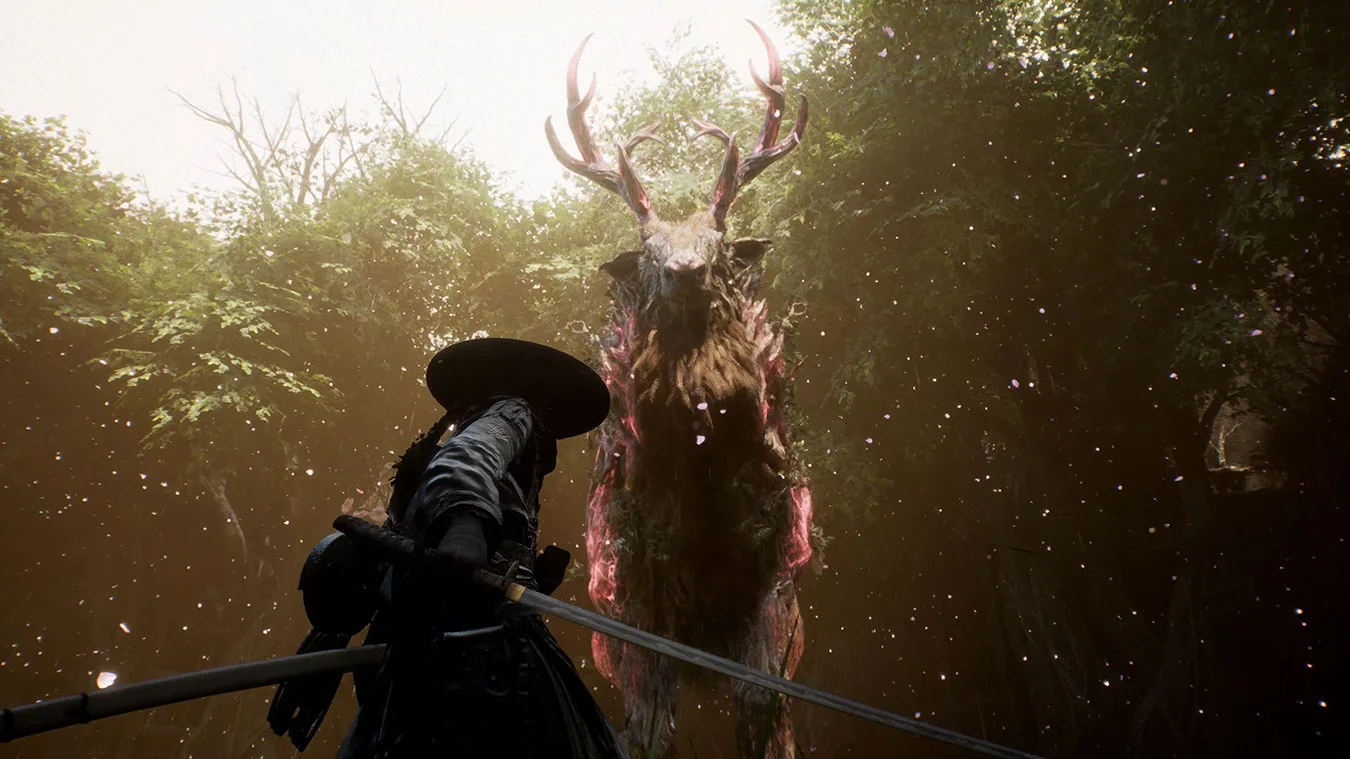
Beast of Reincarnation is not presented as a standard single-character action game. The official Xbox description centers the relationship between Emma’s sword abilities and Koo’s command techniques, calling their synergy a new action RPG experience. The result appears to be a combat structure where direct reactions and deliberate orders must coexist.
This page separates the official combat vocabulary from systems that have not yet been fully detailed. It is useful for understanding the game’s direction, but it does not assign damage values, cooldowns, skill names, builds, or boss phases that the official sources have not published.
01
Two layers of action
The official Xbox page says players fight with Emma’s sword abilities while giving Koo commands to use various techniques, “just like in a turn-based RPG.” That comparison points to an intentional decision layer within the action. Emma’s movements and attacks appear to handle the immediate physical exchange, while Koo’s techniques create another set of choices that can be selected at the right moment.
The official PlayStation Blog now names the bridge between those layers. A successful parry, called a just guard there, earns points for Koo’s skills. The same post says the command menu is opened with Triangle and slows time while a technique is selected. Those are concrete pre-launch control facts: parrying feeds the command side, and commands are meant to be chosen inside a managed pause rather than by abandoning the action.
That setup gives a first session a clear learning order. Practice the parry window against a safe early enemy, watch the points it produces, open Koo’s menu without panic, and compare the available techniques in the slowed-time state. The released game’s tutorials and menu labels will show the full resource rules, but the official material already establishes a combat loop with both reaction and choice.
02
Synergy is the main combat promise
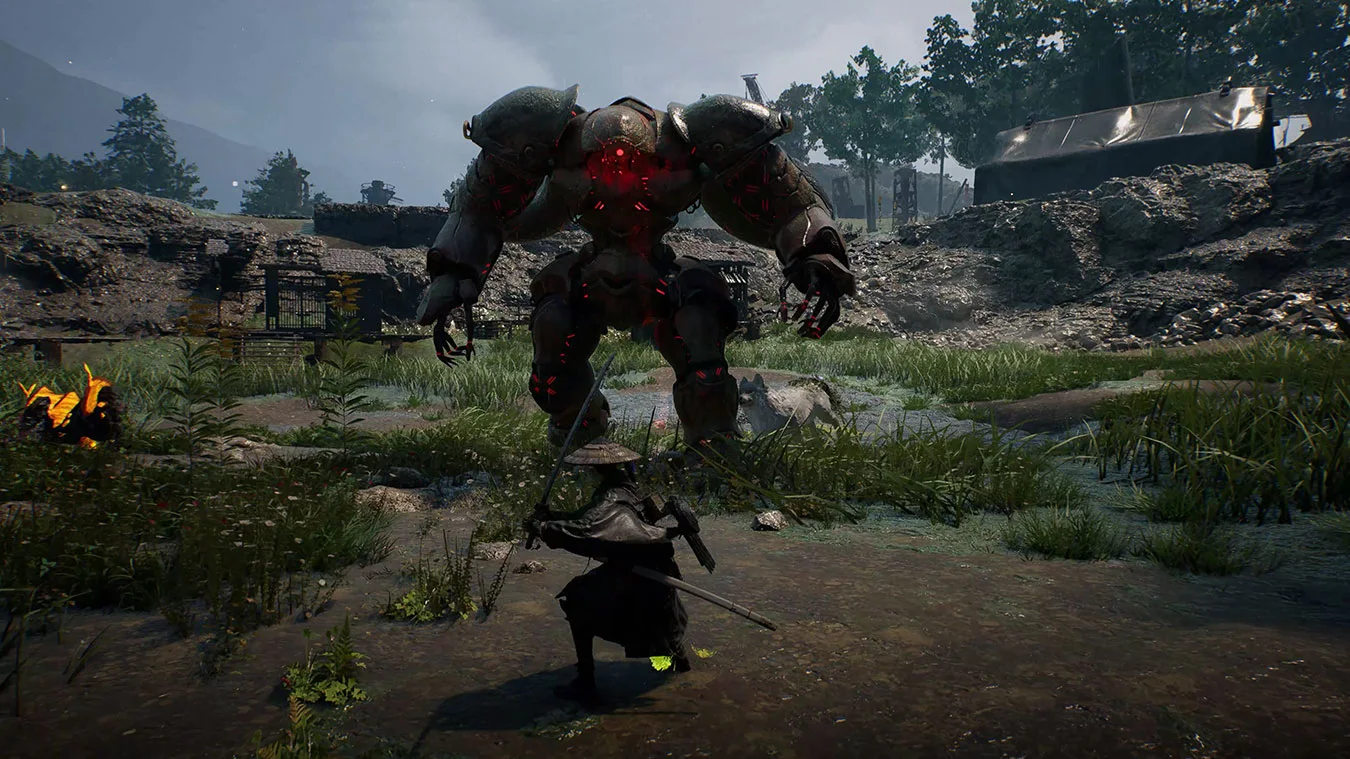
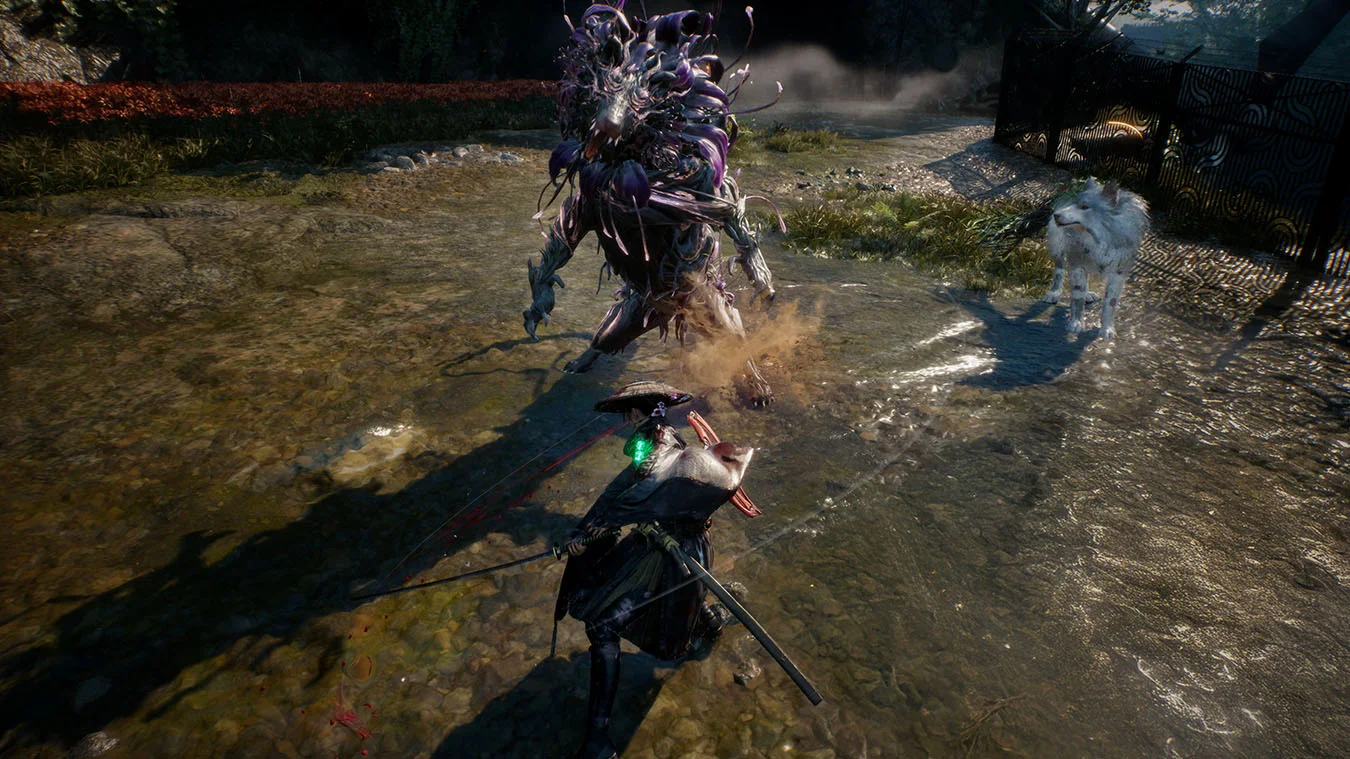
Xbox explicitly calls the relationship between Emma and Koo “synergy.” That is a stronger signal than a generic companion claim. It means the first useful question is not only what each character can do in isolation, but how one action creates an opening for the other. Official footage and text establish the pair as a unit without pretending that every technique has already been ranked.
PlayStation describes the game as a one-person, one-dog action RPG and presents the pair’s bond as a source of growing abilities. The announced progression language gives that bond a practical shape: the PS5 game page lists unique skill trees, gear, and spirit stones. It also says players can define a preferred loadout around ranged, stealthy, or aggressive combat. Those are playstyle categories, not a prescribed build list.
For a useful early build, read the combat screen as one connected system. Emma’s sword actions and parries create the immediate tempo; Koo’s command skills spend the player’s attention at key moments; gear, spirit stones, and skill trees are the stated customization layer. Test one playstyle at a time so a changed result can be tied to a specific loadout choice rather than guessed from several simultaneous changes.
03
Boss powers connect combat and progression
Official Xbox copy says Emma and Koo battle bosses and capture their powers in order to defeat the Beast of Reincarnation. This gives boss encounters a stated progression role. It also makes the large creatures in the official gallery more than scenery: they are compatible with a game loop where difficult fights can change the pair’s capabilities.
The PlayStation game page adds that bosses rule the world and that Emma and Koo are sent to face bosses across it after meeting in the far east. Its store wording places captured powers alongside the pair’s journey, while its progression wording lists skill trees, gear, and spirit stones. Together these are strong reasons to pay attention to boss rewards, the menu that receives them, and how they relate to a chosen loadout.
A launch-day boss note should record the in-game name, location, reward text, and the exact menu where the reward appears. That record will distinguish a captured power from a gear piece, spirit stone, or unlocked skill-tree node. It also makes future recommendations auditable: a player can reproduce a route from real names and effects instead of from a trailer image or an assumed boss order.
04
How to read the trailers
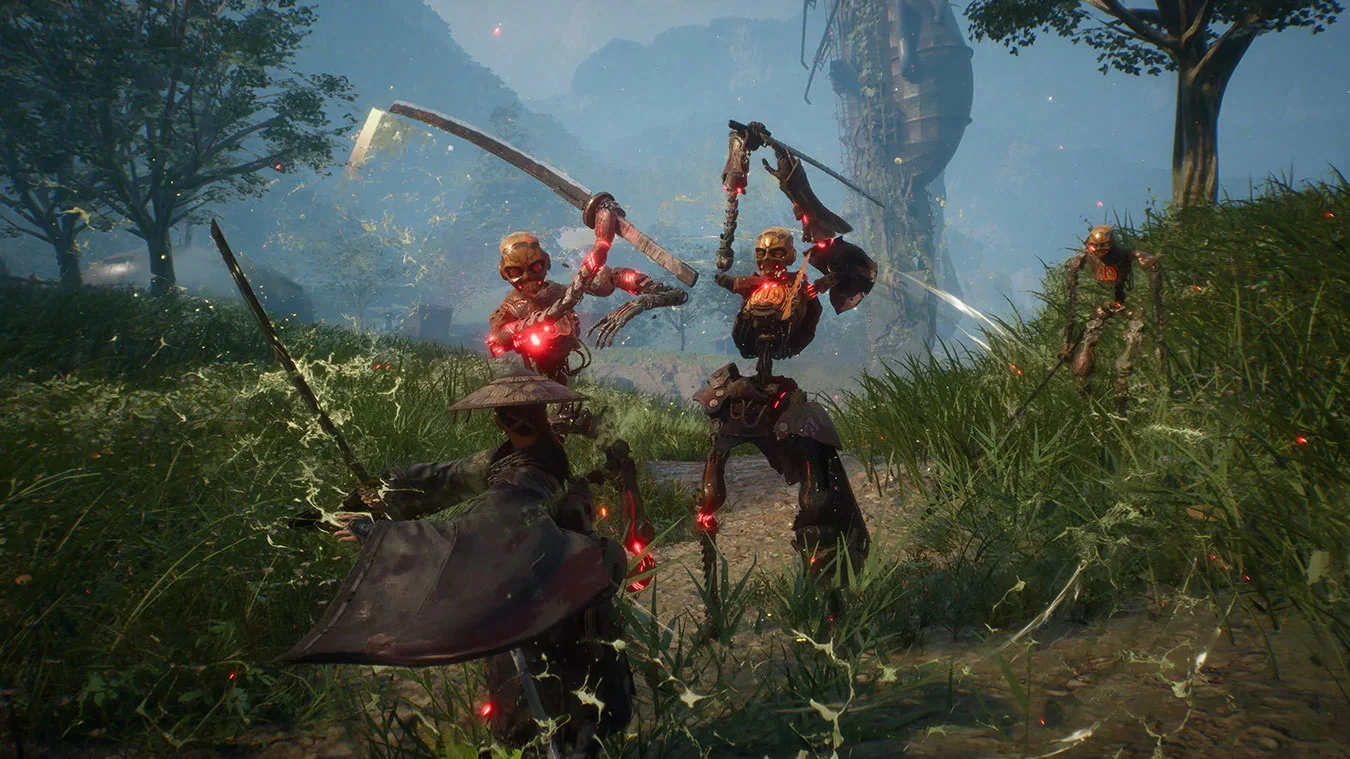
A trailer can show a move without explaining its cost, range, resistance interaction, or availability. Use official footage to identify the tone of combat: Emma moves with a sword through hostile terrain, Koo fights alongside her, and enemies range from organic beasts to large machines. That supports an expectation of demanding encounters, not a spreadsheet of confirmed stats.
The useful written anchors are specific: PlayStation states that Emma can parry to earn points, Koo’s command menu slows time, and the pair can be built with skill trees, gear, spirit stones, and ranged, stealthy, or aggressive loadouts. When a clip shows a flash, a menu transition, or a change in attack style, compare it with those named systems before assigning an explanation to it.
Keep each trailer note tied to one source and one observation. For example, the official pages support an Emma sword action, a Koo command, a boss power, or a changing environment; a later in-game test can supply the exact button sequence, range, and damage behavior. This method turns preview footage into a reliable index for the finished guide instead of a collection of unsupported mechanic names.